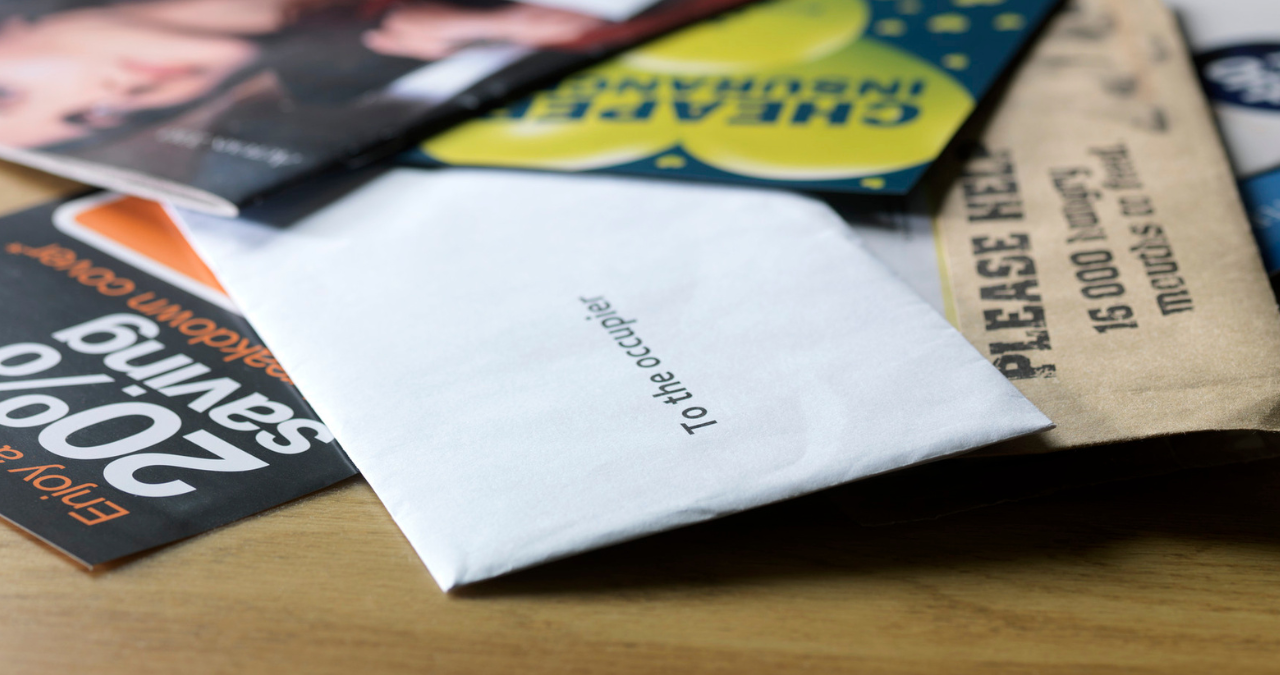
Most homeowners understand that bank statements, tax returns, and medical records should be shredded before being thrown away. But many people still assume that “junk mail” is harmless. In reality, however, most discarded unsolicited mail can provide criminals with valuable pieces of personal information that, when combined with publicly available data, social media activity, or information obtained in data breaches, can be used to put you and your family at risk.
The first thing to understand is that the danger is not necessarily from a single piece of mail. The real risk comes from how a determined fraudster can cross-reference minor details from multiple sources to build a more complete profile of a target.
Example 1: Preapproved Credit Card Offers and Financial Fraud
Preapproved credit card offers are among the most commonly discarded forms of mail. Many people toss them directly into the trash without shredding them because they are viewed as advertisements rather than sensitive documents.
However, these mailers often contain:
- Full names
- Home address
- Partial account or offer numbers
- Bank or lender information
- Credit-related identifiers
- Indications that the recipient has a favorable credit profile
A criminal who retrieves this information may begin building a broader profile of the victim.
First, the fraudster could use the victim’s name and address to search publicly available information online, including social media accounts, property records, and people-search websites. From there, they may identify family members, approximate age, employer information, or other background details.
Next, the criminal could combine that information with data exposed in prior breaches. Unfortunately, billions of personal records containing email addresses, passwords, phone numbers, and partial Social Security numbers are already circulating in underground markets.
With enough overlapping information, the fraudster may attempt to:
- Open unauthorized financial accounts
- Redirect mail to another address
- Contact financial institutions while impersonating the victim
- Answer identity verification questions using publicly available details
The discarded credit offer itself may not be enough to commit fraud, but it can serve as an important puzzle piece that helps validate the victim’s identity.
Prevention Tips
- Use Shred Vault to destroy all pre-approved credit offers
- Opt out of prescreened credit offers through official credit bureau services
- Monitor credit reports regularly
- Use multifactor authentication on financial accounts
Example 2: Insurance Mailers and Homeowner Impersonation
Offers from auto and home insurance companies may also appear harmless. Yet these mailers often reveal surprisingly useful information.
Insurance solicitations can indicate:
- That the recipient owns a home
- The approximate value of the property
- Vehicle ownership
- Household demographics
- Length of residence in a neighborhood
Suppose a criminal retrieves several insurance offers from a homeowner’s trash. The fraudster now knows the target likely owns property and vehicles. Using online property records, the criminal could confirm the home’s assessed value, mortgage lender, and even the names of co-owners.
The fraudster may then search social media for travel posts, vacation photos, or other clues suggesting when the homeowner is away from the property. Criminals often combine physical-world reconnaissance with digital information gathering.
In some cases, identity thieves use this information to impersonate homeowners when contacting insurance companies, lenders, or contractors. They may attempt to:
- Gain access to account information
- Submit fraudulent claims
- Change mailing addresses
- Intercept replacement cards or checks
- Conduct phishing attacks tailored to the victim
The effectiveness of these scams often depends on how convincing the fraudster appears. A discarded insurance mailer can help establish credibility because it confirms the homeowner’s address, insurer, and property status.
Prevention Tips
- Use Shred Vault to destroy insurance-related mail
- Limit personal details shared publicly on social media
- Review insurance accounts for unauthorized changes
- Use account alerts whenever available
Example 3: Government Notices and Social Engineering
Public notices related to Social Security benefits or government programs are especially valuable to identity thieves because they signal that the recipient may be receiving government benefits or is eligible for age-related programs.
Similarly, invitations to join organizations such as AARP or AAA can provide clues about a person’s age range, lifestyle, and household composition.
A fraudster who retrieves this type of mail may begin by confirming the victim’s identity through public records databases and online searches. Once the criminal has enough background information, they may attempt social engineering attacks.
Social engineering occurs when criminals manipulate victims or organizations into disclosing sensitive information.
For example, a scammer may impersonate:
- A government employee
- A Social Security representative
- An insurance agent
- A membership organization representative
- A bank fraud department employee
Because the criminal already knows details about the victim’s address, age range, or government correspondence, the communication may sound legitimate.
The fraudster might then attempt to trick the victim into revealing:
- Account credentials
- One-time security codes
- Banking information
- Medicare or Social Security identifiers
Alternatively, the criminal may target customer service representatives instead of the victim directly. By using accurate personal details gathered from discarded mail and other sources, the scammer may persuade organizations to reset passwords or disclose account information.
Prevention Tips
- Use Shred Vault to destroy all government notices and membership solicitations
- Be cautious of unsolicited calls or emails requesting personal information
- Verify organizations independently before responding
- Freeze credit reports if identity theft is suspected
Small Pieces of Information Create Big Risks
Identity fraud rarely begins with a single dramatic breach. More often, it develops through the gradual collection of small pieces of information from many different sources.
A discarded mail offer may seem insignificant by itself. But when combined with online records, social media activity, and breached data, it can help criminals create a detailed profile of a homeowner.
The good news is that homeowners can dramatically reduce their risk with a few simple habits:
- Use Shred Vault to destroy unsolicited mail containing personal information
- Retrieve mail promptly
- Limit oversharing on social media
- Use strong passwords and multifactor authentication
Treating unsolicited mail with the same caution as financial documents can help close an often-overlooked gap in personal security. In today’s environment, even “junk mail” deserves careful handling.
Find your nearest Shred Vault kiosk and clear out your junk mail today.
Learn more about the risk of identity theft from junk mail.